University of Oxford and BIIE launch collaboration in translational immune engineering
Researchers from the Department of Paediatrics at the University of Oxford and the Botnar Institute of Immune Engineering (BIIE) came together in Oxford last week for the inaugural scientific meeting of the new Basel–Oxford Centre for Translational Immune Engineering for Child and Adolescent Health (CTIE). The CTIE is a new collaboration between the Department of Paediatrics and the BIIE in Basel, Switzerland, designed to accelerate the translation of advances in immune engineering into new diagnostics, vaccines, therapeutics and other approaches to prevent and treat disease. Its focus is on improving the health of children and adolescents in low- and middle-income countries.
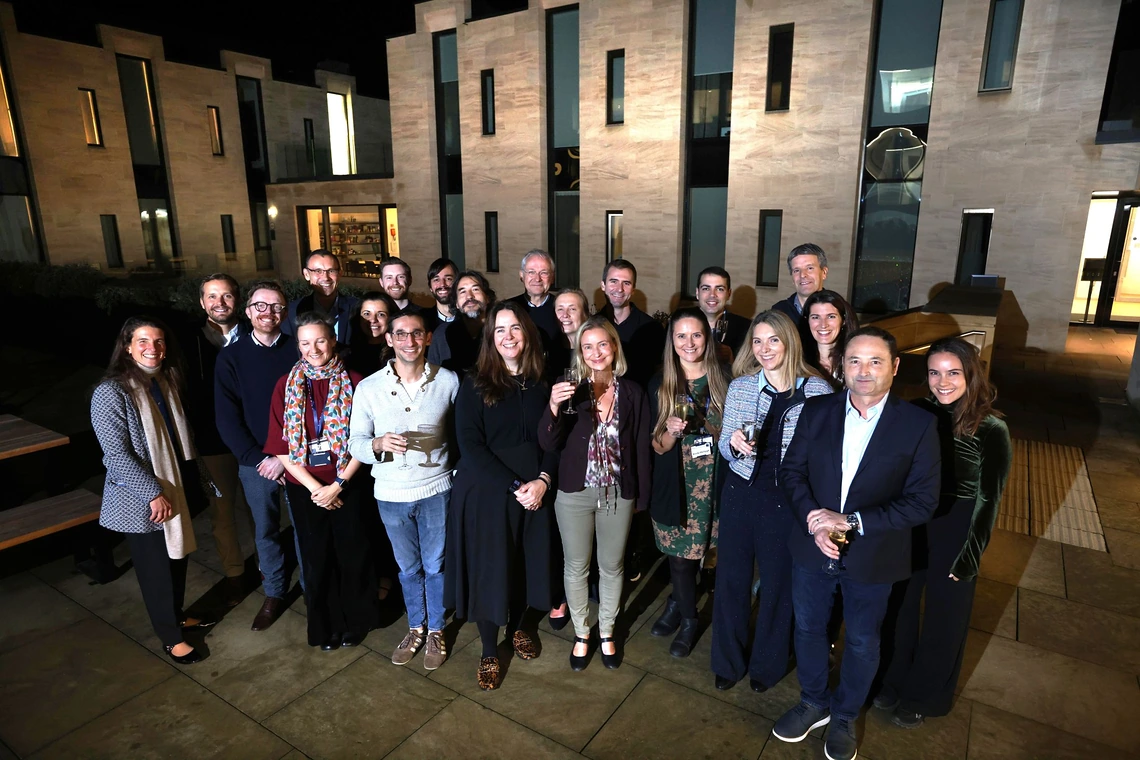
The Centre will bring together complementary expertise and infrastructure across Oxford and Basel to support long-term collaborative research, training and translation.
The BIIE is developing a distinctive approach to immune engineering built around three interconnected fields: systems immunology, computational immunology and synthetic immunology. Combining advanced experimental technologies with computational biology, artificial intelligence and machine learning, its research seeks both to understand how immune systems vary between individuals and populations and to use those insights to design new interventions. A central part of its mission is improving the health of children and adolescents in low- and middle-income countries.
Oxford’s Department of Paediatrics brings extensive expertise in paediatrics, immunology, infectious disease, vaccinology and translational medicine, alongside established clinical cohorts, early-phase clinical trial capabilities and global health research networks. Through the CTIE, researchers at the two institutions will work together to connect discoveries in immune engineering with human biology, clinical development and real-world implementation.
Building the Basel–Oxford collaboration
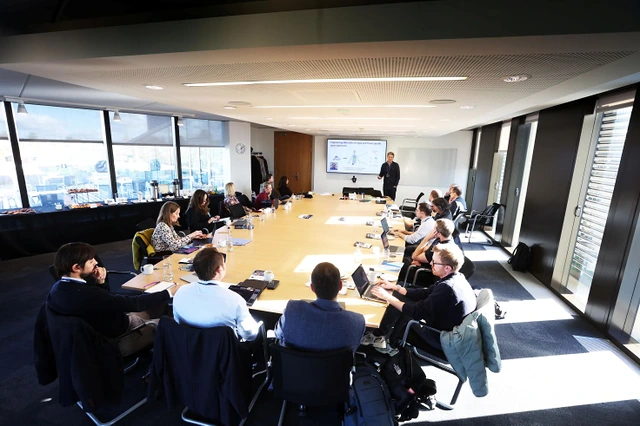
The Centre’s inaugural scientific meeting took place in Oxford last week and brought together researchers from the BIIE and a number of Departments in Oxford to identify complementary expertise and develop new collaborative research opportunities.
Scientific sessions explored areas including clinical cohorts and experimental medicine, global health, precision medicine, antibody discovery and biologics, diagnostics, translational immunology and vaccine delivery. The meeting also allowed dedicated time for researchers to develop potential joint projects aligned with the CTIE’s scientific and translational priorities.
Following the meeting, teams will be supported to develop collaborative Oxford–BIIE research proposals for funding consideration through the CTIE, creating a pipeline of ambitious projects that combine expertise and capabilities across the two sites.
Professor Simon Draper FMedSci, Professor of Vaccinology and Translational Medicine in Oxford’s Department of Paediatrics and Director of the CTIE, said: “The CTIE gives us an exciting opportunity to combine cutting-edge immune engineering in Basel with Oxford’s strengths in human immunology, clinical translation and global health. By bringing researchers together around ambitious collaborative projects, we want to shorten the pathway from scientific discovery to interventions that can make a meaningful impact on human health.”
Professor Georg Holländer, Head of the Department of Paediatrics at the University of Oxford and Medical Director at the BIIE, said: “This partnership brings together genuinely complementary scientific strengths. By connecting advanced systems, computational and synthetic immunology with Oxford’s expertise in paediatrics, translational medicine and global health clinical research, we can build a coherent pathway from understanding the immune system to developing tangible health solutions for children and adolescents worldwide.”
Dr Stephen Wilson, Chief Executive Officer of the BIIE, said: “The CTIE is an important step in realising the BIIE’s ambition to couple world-leading immune engineering with clear routes to clinical and global health impact. Through this partnership, we can combine complementary scientific and clinical expertise to advance discoveries towards practical and accessible health solutions for children and adolescents.”
Dr Melanie Wiesel, Director of Administrative Operations at the BIIE, said: “Partnerships with leading academic institutions as well as with organisations in low-and middle-income countries are central to how we are building the BIIE. Our collaboration with the University of Oxford brings together complementary expertise and creates opportunities for scientific exchange, training and research projects, helping us advance our shared mission.”
Investing in research and training
Alongside funding for collaborative research, a central element of the new Basel-Oxford partnership will be a joint doctoral training programme. Students will undertake research at the BIIE in Basel while remaining fully registered Oxford students and benefiting from joint supervision and training across both institutions. The partnership will also support academic integration between Basel and Oxford through professorial double appointments between Basel and Oxford for senior BIIE investigators.
Together, these initiatives are designed to create a long-term scientific community spanning Oxford and Basel — combining discovery, technology development, clinical translation and training to accelerate a new generation of immune-engineered solutions for global health.